Where exactly is your firm losing control of project information?
A free 60-minute diagnostic session. You leave with a mapped list of the governance decisions your firm hasn't made yet in the order they need to be made.
Apply for a sessionNo cost. Nothing sold. Written summary within two days.
Most companies don't have one problem with information
They have several, tangled together, and no way to tell which one is causing the others.
Here is what it looks like day to day.
-
Finding a document takes far too long
There is no consistent way documents are named or filed, so engineers spend hours every week looking for the drawing they need. Ask three people where something is and you get three answers.
-
People work from drawings that are no longer valid
Somebody builds from a drawing that was replaced two weeks earlier, or coordinates against a model that is out of date. Nobody notices until the work is already done on site.
-
Documents are issued by email, so there is no record
Drawings go to the client or for approval as an attachment. Six months later nobody can prove what was sent, when it was sent, or who approved it.
-
The comments are never where the document is
You send a link to a file, then the file gets discussed in email and Teams. The document sits in one place and the decision about it sits in two others.
The instinct is to blame the people, or to blame the software. Usually it is neither. The company never agreed clear rules for how documents are named, who is allowed to change them, at what point they become official, and how they get sent out. Without those rules, even a well set up platform simply stores the same mess in tidier folders.
If three of these are true in your company, buying more software will not fix it.
That is what this session is for. We go through how information actually moves through your company today, name the problems in plain words, and put them on a map: what has to be fixed first, what can wait, and which one is costing you the most right now.
What you leave with
The decisions your company never made
How you tell the current drawing from an old one. Who may change a document after it is issued. There are several decisions like these behind any system that works, and most companies have never made five to eight of them.
Which one to fix first
Some of these decisions depend on others. Set up folders before you agree how a drawing gets approved, and you rebuild the whole thing a year later.
What you can actually change
Some companies can change how they work next week. Others are on a platform the client chose, with no rights to change the settings. That changes the whole answer.
One thing you can finish in two weeks
Not a strategy document. One concrete step, sized to what your company can actually do.
All governance decisions on one page
Marked up for your company: made, made but not followed, or never made. Short enough to forward to your director. Yours either way.
What we actually do
Around an hour, on a call, in this order.
Setup
What this session is and what it isn't. No presentation, no pitch.
Your company
What your company projects are, how big the team is, who your clients are, and whose system you are actually working in: yours or theirs.
What you are allowed to change
Who decides, who pays, what the contract requires, whether anyone at your end can change the settings and way other people work on the projects. Usually the most useful part of the call.
I tell you which governance rules your company is missing
How documents are named. What counts as approved and who may say so. Who can change a document after it is issued. How things leave the company and what record they leave behind. I mark which of these your company has never agreed.
Where that leaves you
Your open decisions, named and put in order. Your first step.
Four steps
Apply
The form below. Two minutes.
Selection
I review every application and choose 12. You'll hear back by 30 September either way.
Pre-session audit
If selected, you get a 15-minute questionnaire. This matters: without it the session stays generic, and generic helps nobody.
The session
October or November, at a time you pick from my calendar.
Is this for you?
This is a good fit if
- Your firm has 30–500 people: best if you are a design consultancy, engineering practice, or contractor
- You use Autodesk Forma (formerly ACC), or you're about to
- You're the person who carries responsibility for how information is managed
- You're past "we need better software" and into "we need a way of working"
This is not a good fit if
- You want software training. There's plenty available, much of it free, including mine.
- You want someone to configure your environment. This is diagnosis, not delivery.
- Your firm is under 20 people. The overhead doesn't pay off yet, and I'd be wasting your time.
Ignacy Łoziński
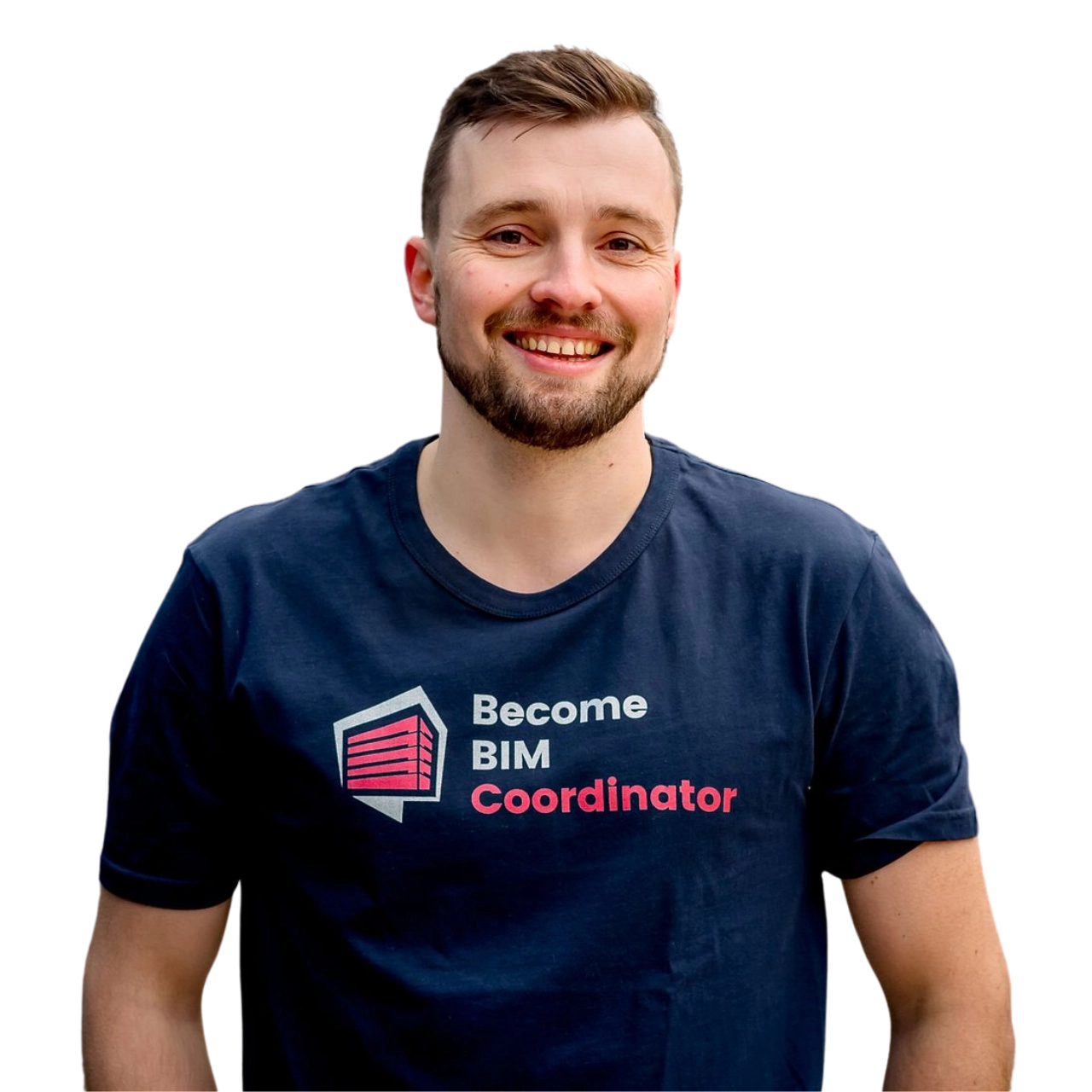
Fourteen years on delivery projects as task team lead and appointed party, including ten years in Norway on large building and infrastructure work.
I co-founded BIM Corner and trained over 800 people through Become BIM Coordinator.
I've spent this year interviewing practitioners across eleven countries about what actually breaks in information management. Most of what I'll bring to this session comes from that — and from doing the job myself under deadline.
Why I'm doing this for free
I'm building an implementation program called CDE ROI Accelerator. The first cohort starts 12 January, with 8 places.
I'm telling you this now so nothing feels like a bait and switch later.
These sessions serve two purposes. You get a diagnosis you'd otherwise pay for. I get real cases from firms like yours while I'm still designing the program — which makes it better.
That's the whole trade. If at the end of the session you want to talk about the program, we'll arrange that separately. If you don't, the summary is still yours.
Questions
Is there really no cost?
Why only 12 sessions?
Why is the earliest session in October?
We're not on Forma yet. Still worth it?
Do I need to prepare?
Will you pitch me?
What if I'm not selected?
Two minutes
I read every application personally.
You'll hear back by 30 September.
